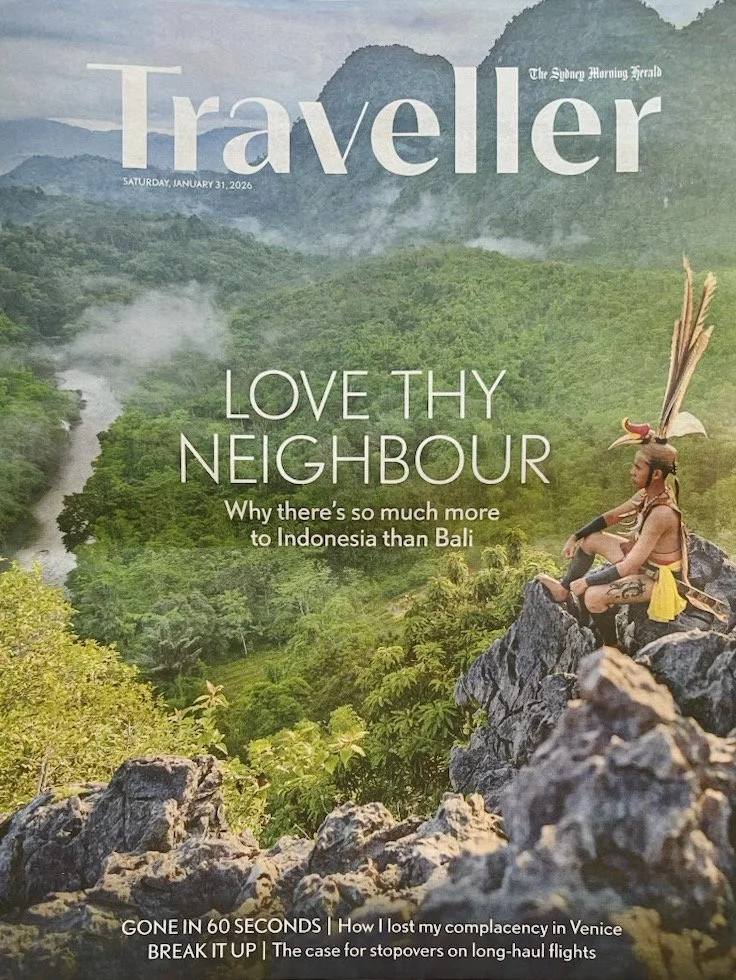
iNDONESIA BEYOND BALI: SMH TRAVELLER
BALI’S JUST THE BEGINNING WHEN IT COMES TO OUR EXOTIC NEAR NEIGHBOUR AND ITS 17,500 OR SO ISLES, WRITES NINA KARNIKOWSKI.
For decades, many Australian travellers have treated Indonesia as though it begins and ends with Bali. You get on a plane, land in Denpasar, and behave as though the rest of the world’s largest archipelago simply doesn’t exist.
In fact, many do not realise Bali is even part of Indonesia, seeing it as a separate country in its own right – a bit like flying to Hobart and insisting you’ve “done Australia”.
This narrow lens means the rest of Indonesia – all 17,000-plus islands, dozens of cultures, and ecosystems ranging from misty highlands to Jurassic Park-like savannah – has stayed conveniently out of focus. And to be fair, there are reasons for that.
A decade ago, domestic flights could be, well, character-building. I once took a plane to the Indonesian island of Flores that rattled so wildly there was applause on landing. Roads were rough, ferries unpredictable, and attempting to reach an outlying island often required determination, luck, and possibly a small prayer circle.
But the 2026 version of Indonesia is changing. Domestic carriers like Indonesia AirAsia and Citilink have regained IOSA (IATA Operational Safety Audit) certification, a globally recognised evaluation system controlled by the International Air Transport Association.
New fast boats run between Bali and the Nusa Islands and the Gilis, and airports such as Labuan Bajo and Yogyakarta International have had the kind of glow-up most influencers would envy.
There’s now also Whoosh, South-East Asia’s first high-speed train, shrinking the Jakarta-Bandung trip from three hours to about 40 minutes.
On remote islands including Sumba and the Mentawais, you’ll now find much-improved roads, more reliable power, and eco-lodges staffed by communities who are using tourism to protect local culture, so they can welcome more visitors without losing what makes them unique.
What this all means is simple. The parts of Indonesia most Australians never see – Sulawesi’s coral-ringed peninsulas, Kalimantan’s orangutan-rich rainforests, the savannah islands east of Flores – are now surprisingly doable.
Smartraveller, the Australian government’s travel advisory website, still advises a high degree of caution when visiting Indonesia, citing everything from rough seas and volcanic wobbles to the usual big-city petty crime, issues that don’t prevent large numbers of us visiting Bali.
But for many travellers, especially those searching for new adventures on our doorstep, the idea that greater Indonesia is just “too hard” belongs firmly in the past.
Which is why we are showcasing 10 Indonesian places, from Aceh’s jungles to the country’s far-flung eastern isles, that demonstrate just how rich, varied and wonderfully accessible the archipelago has become.
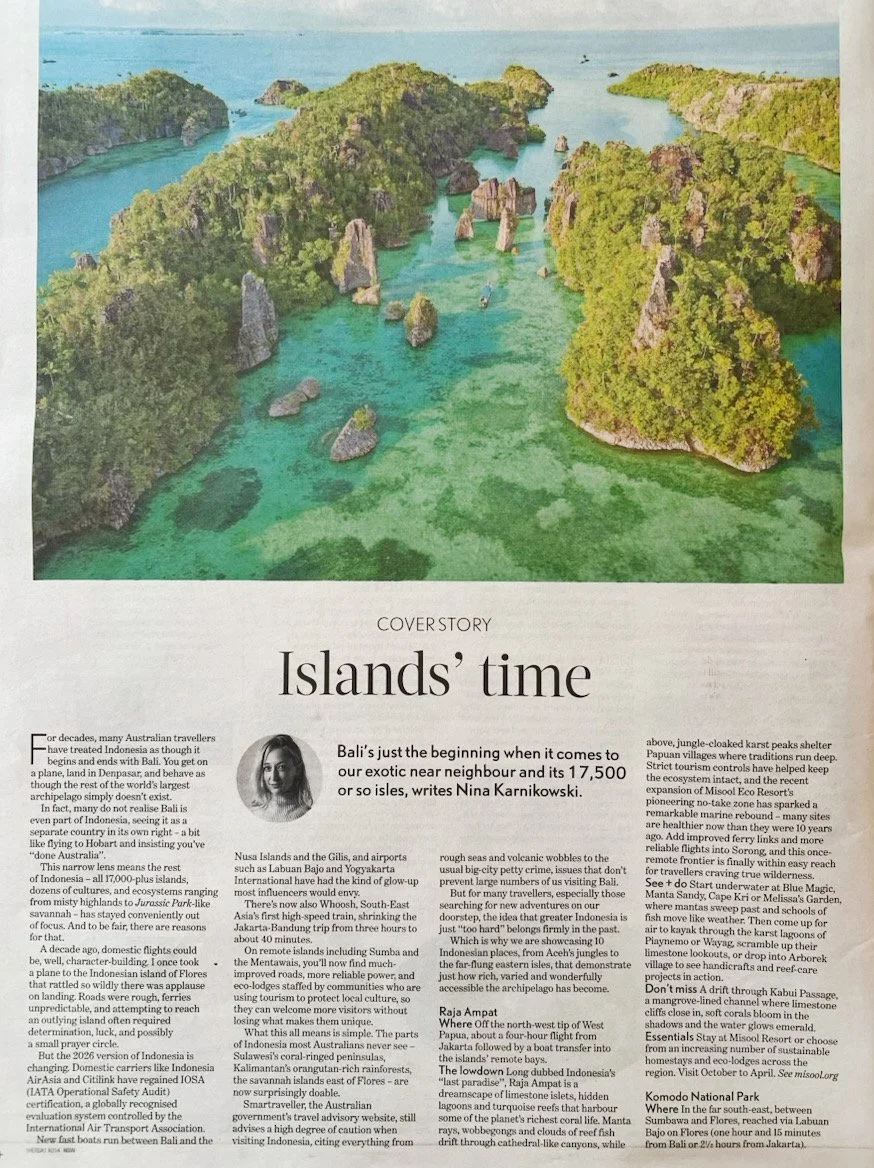
Raja Ampat
Where
Off the northwest tip of West Papua, about a four-hour flight from Jakarta followed by a boat transfer into the islands’ remote bays.
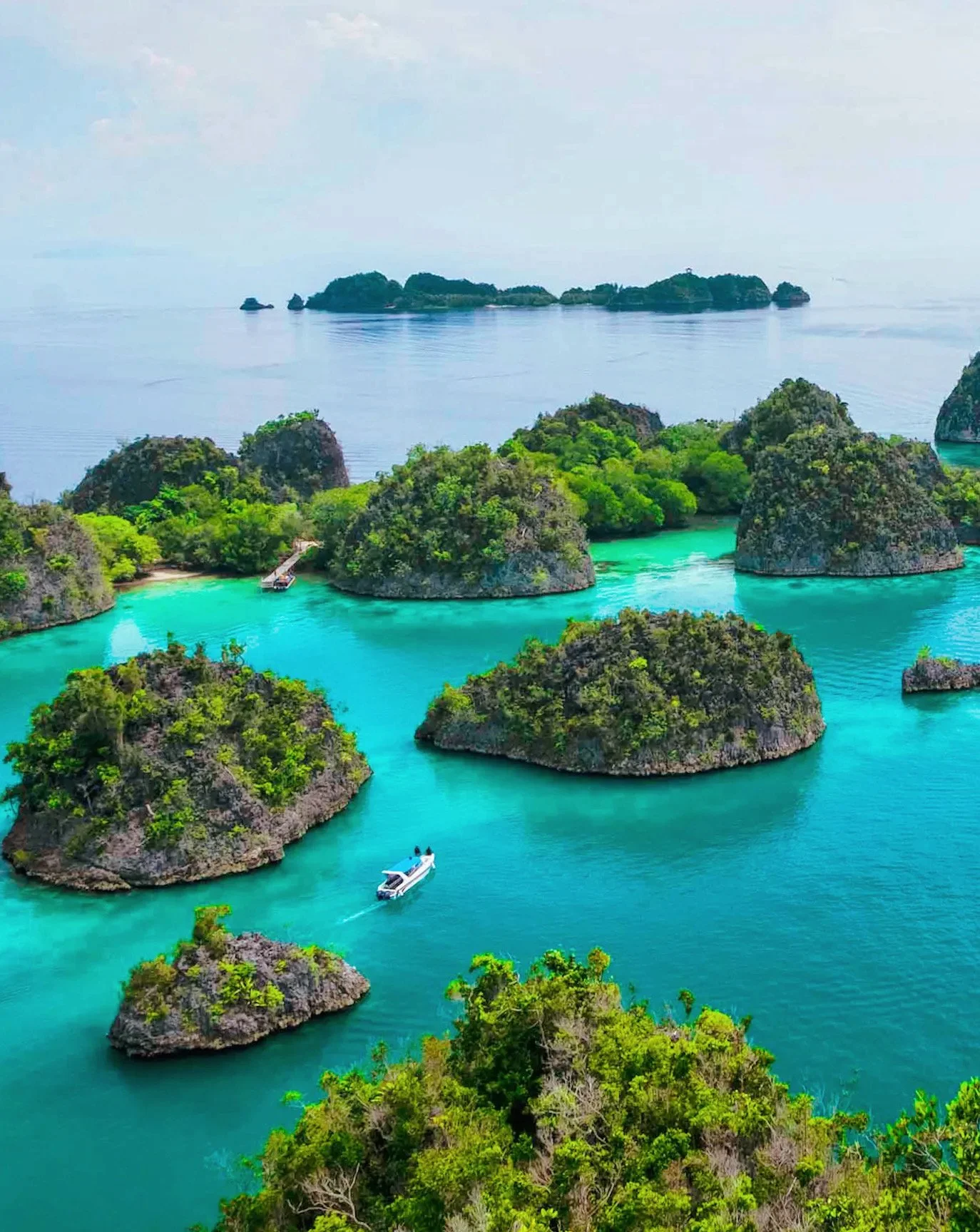
The lowdown Long dubbed Indonesia’s “last paradise”, Raja Ampat is a dreamscape of limestone islets, hidden lagoons and turquoise reefs that harbour some of the planet’s richest coral life. Manta rays, wobbegongs and clouds of reef fish drift through cathedral-like canyons, while above, jungle-cloaked karst peaks shelter Papuan villages where traditions run deep. Strict tourism controls have helped keep the ecosystem intact, and the recent expansion of Misool Eco Resort’s pioneering no-take zone has sparked a remarkable marine rebound – many sites are healthier now than they were 10 years ago. Add improved ferry links and more reliable flights into Sorong, and this once-remote frontier is finally within easy reach for travellers craving true wilderness.
See + do
Start underwater at Blue Magic, Manta Sandy, Cape Kri or Melissa’s Garden, where mantas sweep past and schools of fish move like weather. Then come up for air to kayak through the karst lagoons of Piaynemo or Wayag, scramble up their limestone lookouts, or drop into Arborek village to see handicrafts and reef-care projects in action.
Don’t miss
A drift through Kabui Passage, a mangrove-lined channel where limestone cliffs close in, soft corals bloom in the shadows and the water glows emerald.
Essentials
Stay at Misool Resort or choose from an increasing number of sustainable homestays and eco-lodges across the region. Visit October to April. See misool.org
Komodo National Park
Where
In the far south-east, between Sumbawa and Flores, reached via Labuan Bajo on Flores (one hour and 15 minutes from Bali or 2½ hours from Jakarta).
The lowdown
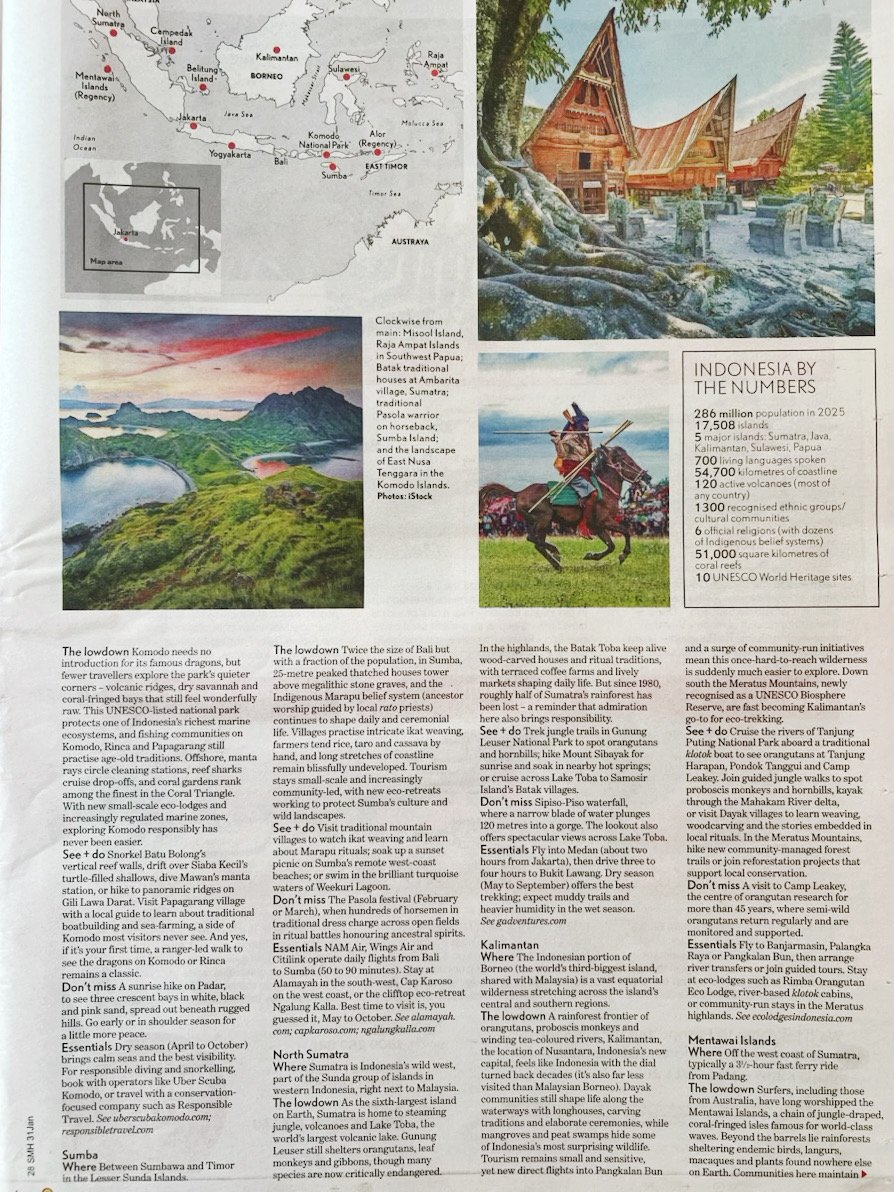
Komodo needs no introduction for its famous dragons, but fewer travellers explore the park’s quieter corners – volcanic ridges, dry savannah and coral-fringed bays that still feel wonderfully raw. This UNESCO-listed national park protects one of Indonesia’s richest marine ecosystems, and fishing communities on Komodo, Rinca and Papagarang still practise age-old traditions. Offshore, manta rays circle cleaning stations, reef sharks cruise drop-offs, and coral gardens rank among the finest in the Coral Triangle. With new small-scale eco-lodges and increasingly regulated marine zones, exploring Komodo responsibly has never been easier.
See + do
Snorkel Batu Bolong’s vertical reef walls, drift over Siaba Kecil’s turtle-filled shallows, dive Mawan’s manta station, or hike to panoramic ridges on Gili Lawa Darat. Visit Papagarang village with a local guide to learn about traditional boatbuilding and sea-farming, a side of Komodo most visitors never see. And yes, if it’s your first time, a ranger-led walk to see the dragons on Komodo or Rinca remains a classic.
Don’t miss
A sunrise hike on Padar, to see three crescent bays in white, black and pink sand, spread out beneath rugged hills. Go early or in shoulder season for a little more peace.
Essentials
Dry season (April to October) brings calm seas and the best visibility. For responsible diving and snorkelling, book with operators like Uber Scuba Komodo, or travel with a conservation-focused company such as Responsible Travel. See uberscubakomodo.com; responsibletravel.com
Sumba
Where
Between Sumbawa and Timor in the Lesser Sunda Islands.
The lowdown
Twice the size of Bali but with a fraction of the population, in Sumba, 25-metre peaked thatched houses tower above megalithic stone graves, and the Indigenous Marapu belief system (ancestor worship guided by local rato priests) continues to shape daily and ceremonial life. Villages practise intricate ikat weaving, farmers tend rice, taro and cassava by hand, and long stretches of coastline remain blissfully undeveloped. Tourism stays small-scale and increasingly community-led, with new eco-retreats working to protect Sumba’s culture and wild landscapes.
See + do
Visit traditional mountain villages to watch ikat weaving and learn about Marapu rituals; soak up a sunset picnic on Sumba’s remote west-coast beaches; or swim in the brilliant turquoise waters of Weekuri Lagoon.
Don’t miss
The Pasola festival (February or March), when hundreds of horsemen in traditional dress charge across open fields in ritual battles honouring ancestral spirits.
Essentials
NAM Air, Wings Air and Citilink operate daily flights from Bali to Sumba (50 to 90 minutes). Stay at Alamayah in the south-west, Cap Karoso on the west coast, or the clifftop eco-retreat Ngalung Kalla. Best time to visit is, you guessed it, May to October. See alamayah.com; capkaroso.com; ngalungkalla.com
North Sumatra
Where
Sumatra is Indonesia’s wild west, part of the Sunda group of islands in western Indonesia, right next to Malaysia.
The lowdown
As the sixth-largest island on Earth, Sumatra is home to steaming jungle, volcanoes and Lake Toba, the world’s largest volcanic lake. Gunung Leuser still shelters orangutans, leaf monkeys and gibbons, though many species are now critically endangered. In the highlands, the Batak Toba keep alive wood-carved houses and ritual traditions, with terraced coffee farms and lively markets shaping daily life. But since 1980, roughly half of Sumatra’s rainforest has been lost – a reminder that admiration here also brings responsibility.
See + do
Trek jungle trails in Gunung Leuser National Park to spot orangutans and hornbills; hike Mount Sibayak for sunrise and soak in nearby hot springs; or cruise across Lake Toba to Samosir Island’s Batak villages.
Don’t miss
Sipiso-Piso waterfall, where a narrow blade of water plunges 120 metres into a gorge. The lookout also offers spectacular views across Lake Toba.
Essentials
Fly into Medan (about two hours from Jakarta), then drive three to four hours to Bukit Lawang. Dry season (May to September) offers the best trekking; expect muddy trails and heavier humidity in the wet season. See gadventures.com
Kalimantan
Where
The Indonesian portion of Borneo (the world’s third-biggest island, shared with Malaysia) is a vast equatorial wilderness stretching across the island’s central and southern regions.
The lowdown
A rainforest frontier of orangutans, proboscis monkeys and winding tea-coloured rivers, Kalimantan, the location of Nusantara, Indonesia’s new capital, feels like Indonesia with the dial turned back decades (it’s also far less visited than Malaysian Borneo). Dayak communities still shape life along the waterways with longhouses, carving traditions and elaborate ceremonies, while mangroves and peat swamps hide some of Indonesia’s most surprising wildlife. Tourism remains small and sensitive, yet new direct flights into Pangkalan Bun and a surge of community-run initiatives mean this once-hard-to-reach wilderness is suddenly much easier to explore. Down south the Meratus Mountains, newly recognised as a UNESCO Biosphere Reserve, are fast becoming Kalimantan’s go-to for eco-trekking.
See + do
Cruise the rivers of Tanjung Puting National Park aboard a traditional klotok boat to see orangutans at Tanjung Harapan, Pondok Tanggui and Camp Leakey. Join guided jungle walks to spot proboscis monkeys and hornbills, kayak through the Mahakam River delta, or visit Dayak villages to learn weaving, woodcarving and the stories embedded in local rituals. In the Meratus Mountains, hike new community-managed forest trails or join reforestation projects that support local conservation.
Don’t miss
A visit to Camp Leakey, the centre of orangutan research for more than 45 years, where semi-wild orangutans return regularly and are monitored and supported.
Essentials
Fly to Banjarmasin, Palangka Raya or Pangkalan Bun, then arrange river transfers or join guided tours. Stay at eco-lodges such as Rimba Orangutan Eco Lodge, river-based klotok cabins, or community-run stays in the Meratus highlands. See ecolodgesindonesia.com
Mentawai Islands
Where
Off the west coast of Sumatra, typically a 3½-hour fast ferry ride from Padang.
The lowdown
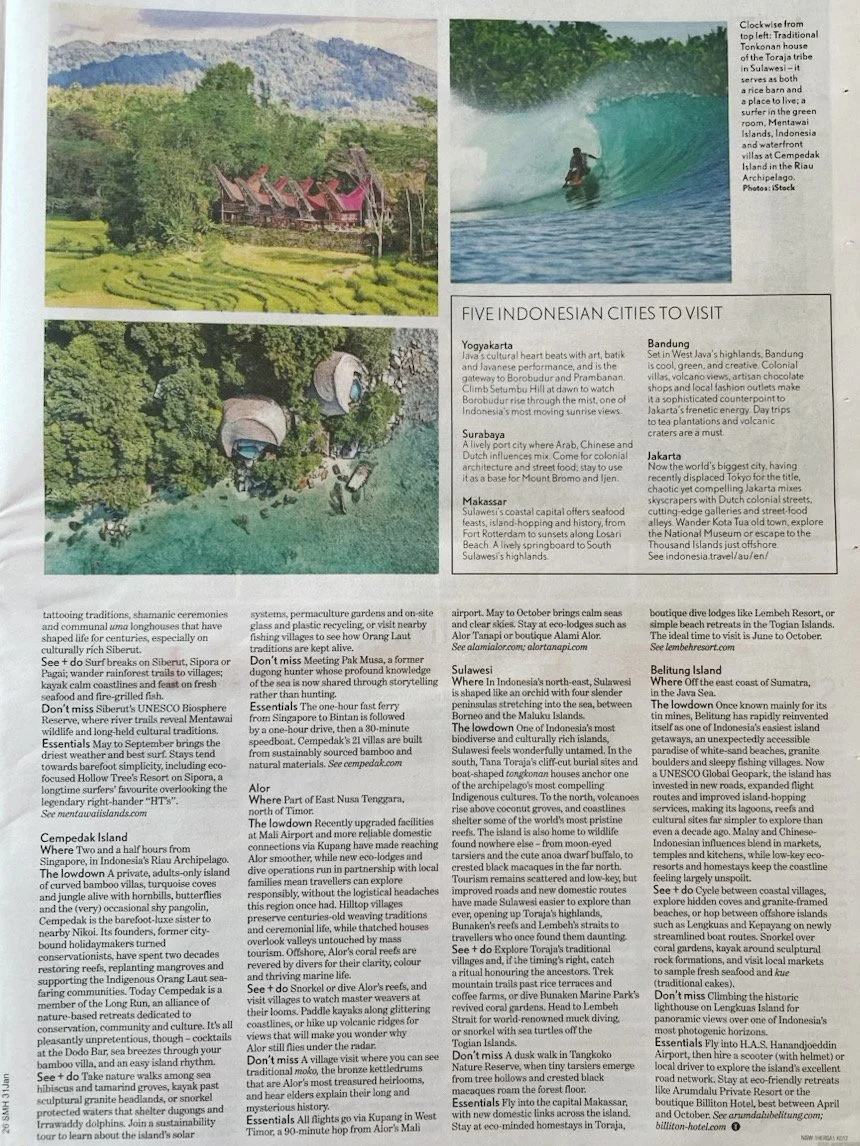
Surfers, including those from Australia, have long worshipped the Mentawai Islands, a chain of jungle-draped, coral-fringed isles famous for world-class waves. Beyond the barrels lie rainforests sheltering endemic birds, langurs, macaques and plants found nowhere else on Earth. Communities here maintain tattooing traditions, shamanic ceremonies and communal uma longhouses that have shaped life for centuries, especially on culturally rich Siberut.
See + do
Surf breaks on Siberut, Sipora or Pagai; wander rainforest trails to villages; kayak calm coastlines and feast on fresh seafood and fire-grilled fish.
Don’t miss
Siberut’s UNESCO Biosphere Reserve, where river trails reveal Mentawai wildlife and long-held cultural traditions.
Essentials
May to September brings the driest weather and best surf. Stays tend towards barefoot simplicity, including eco-focused Hollow Tree’s Resort on Sipora, a longtime surfers’ favourite overlooking the legendary right-hander “HT’s”. See mentawaiislands.com
Cempedak Island
Where
Two and a half hours from Singapore, in Indonesia’s Riau Archipelago.
The lowdown
A private, adults-only island of curved bamboo villas, turquoise coves and jungle alive with hornbills, butterflies and the (very) occasional shy pangolin, Cempedak is the barefoot-luxe sister to nearby Nikoi. Its founders, former city-bound holidaymakers turned conservationists, have spent two decades restoring reefs, replanting mangroves and supporting the Indigenous Orang Laut sea-faring communities. Today Cempedak is a member of the Long Run, an alliance of nature-based retreats dedicated to conservation, community and culture. It’s all pleasantly unpretentious, though – cocktails at the Dodo Bar, sea breezes through your bamboo villa, and an easy island rhythm.
See + do
Take nature walks among sea hibiscus and tamarind groves, kayak past sculptural granite headlands, or snorkel protected waters that shelter dugongs and Irrawaddy dolphins. Join a sustainability tour to learn about the island’s solar systems, permaculture gardens and on-site glass and plastic recycling, or visit nearby fishing villages to see how Orang Laut traditions are kept alive.
Don’t miss
Meeting Pak Musa, a former dugong hunter whose profound knowledge of the sea is now shared through storytelling rather than hunting.
Essentials
The one-hour fast ferry from Singapore to Bintan is followed by a one-hour drive, then a 30-minute speedboat. Cempedak’s 21 villas are built from sustainably sourced bamboo and natural materials. See cempedak.com
Alor
Where
Part of East Nusa Tenggara, north of Timor.
The lowdown
Recently upgraded facilities at Mali Airport and more reliable domestic connections via Kupang have made reaching Alor smoother, while new eco-lodges and dive operations run in partnership with local families mean travellers can explore responsibly, without the logistical headaches this region once had. Hilltop villages preserve centuries-old weaving traditions and ceremonial life, while thatched houses overlook valleys untouched by mass tourism. Offshore, Alor’s coral reefs are revered by divers for their clarity, colour and thriving marine life.
See + do
Snorkel or dive Alor’s reefs, and visit villages to watch master weavers at their looms. Paddle kayaks along glittering coastlines, or hike up volcanic ridges for views that will make you wonder why Alor still flies under the radar.
Don’t miss
A village visit where you can see traditional moko, the bronze kettledrums that are Alor’s most treasured heirlooms, and hear elders explain their long and mysterious history.
Essentials
All flights go via Kupang in West Timor, a 90-minute hop from Alor’s Mali airport. May to October brings calm seas and clear skies. Stay at eco-lodges such as Alor Tanapi or boutique Alami Alor. See alamialor.com; alortanapi.com
Sulawesi
Where
In Indonesia’s north-east, Sulawesi is shaped like an orchid with four slender peninsulas stretching into the sea, between Borneo and the Maluku Islands.
The lowdown
One of Indonesia’s most biodiverse and culturally rich islands, Sulawesi feels wonderfully untamed. In the south, Tana Toraja’s cliff-cut burial sites and boat-shaped tongkonan houses anchor one of the archipelago’s most compelling Indigenous cultures. To the north, volcanoes rise above coconut groves, and coastlines shelter some of the world’s most pristine reefs. The island is also home to wildlife found nowhere else – from moon-eyed tarsiers and the cute anoa dwarf buffalo, to crested black macaques in the far north. Tourism remains scattered and low-key, but improved roads and new domestic routes have made Sulawesi easier to explore than ever, opening up Toraja’s highlands, Bunaken’s reefs and Lembeh’s straits to travellers who once found them daunting.
See + do
Explore Toraja’s traditional villages and, if the timing’s right, catch a ritual honouring the ancestors. Trek mountain trails past rice terraces and coffee farms, or dive Bunaken Marine Park’s revived coral gardens. Head to Lembeh Strait for world-renowned muck diving, or snorkel with sea turtles off the Togian Islands.
Don’t miss
A dusk walk in Tangkoko Nature Reserve, when tiny tarsiers emerge from tree hollows and crested black macaques roam the forest floor.
Essentials
Fly into the capital Makassar, with new domestic links across the island. Stay at eco-minded homestays in Toraja, boutique dive lodges like Lembeh Resort, or simple beach retreats in the Togian Islands. The ideal time to visit is June to October. See lembehresort.com
Belitung Island
Where
Off the east coast of Sumatra, in the Java Sea.
The lowdown
Once known mainly for its tin mines, Belitung has rapidly reinvented itself as one of Indonesia’s easiest island getaways, an unexpectedly accessible paradise of white-sand beaches, granite boulders and sleepy fishing villages. Now a UNESCO Global Geopark, the island has invested in new roads, expanded flight routes and improved island-hopping services, making its lagoons, reefs and cultural sites far simpler to explore than even a decade ago. Malay and Chinese-Indonesian influences blend in markets, temples and kitchens, while low-key eco-resorts and homestays keep the coastline feeling largely unspoilt.
See + do
Cycle between coastal villages, explore hidden coves and granite-framed beaches, or hop between offshore islands such as Lengkuas and Kepayang on newly streamlined boat routes. Snorkel over coral gardens, kayak around sculptural rock formations, and visit local markets to sample fresh seafood and kue (traditional cakes).
Don’t miss
Climbing the historic lighthouse on Lengkuas Island for panoramic views over one of Indonesia’s most photogenic horizons.
Essentials
Fly into H.A.S. Hanandjoeddin Airport, then hire a scooter (with helmet) or local driver to explore the island’s excellent road network. Stay at eco-friendly retreats like Arumdalu Private Resort or the boutique Billiton Hotel, best between April and October. See arumdalubelitung.com; billiton-hotel.com
Five Indonesian cities to consider
Surabaya
A lively port city where Arab, Chinese and Dutch influences mix. Come for colonial architecture and vibrant street food; stay to use it as a base for Mount Bromo and Ijen.
Yogyakarta
Java’s cultural heart beats with art, batik and Javanese performance, and is the gateway to Borobudur and Prambanan. Don’t miss climbing Setumbu Hill at dawn to watch Borobudur rise through the mist, one of Indonesia’s most moving sunrise views.
Makassar
Sulawesi’s coastal capital offers seafood feasts, island-hopping and history, from Fort Rotterdam to sunsets along Losari Beach. A lively, slightly chaotic springboard to South Sulawesi’s highlands.
Bandung
Set in West Java’s highlands, Bandung is cool, green, and creative. Colonial villas, volcano views, artisan chocolate shops and local fashion outlets make it a sophisticated counterpoint to Jakarta’s frenetic energy. Day trips to tea plantations and volcanic craters are a must.
Jakarta
Now the world’s biggest city, having recently displaced Tokyo for the title, chaotic yet compelling Jakarta mixes skyscrapers with Dutch colonial streets, cutting-edge galleries and street-food alleys. Wander Kota Tua old town, explore the National Museum or escape to the Thousand Islands just offshore.
See indonesia.travel/au/en
This story first appeared in print below and online here.