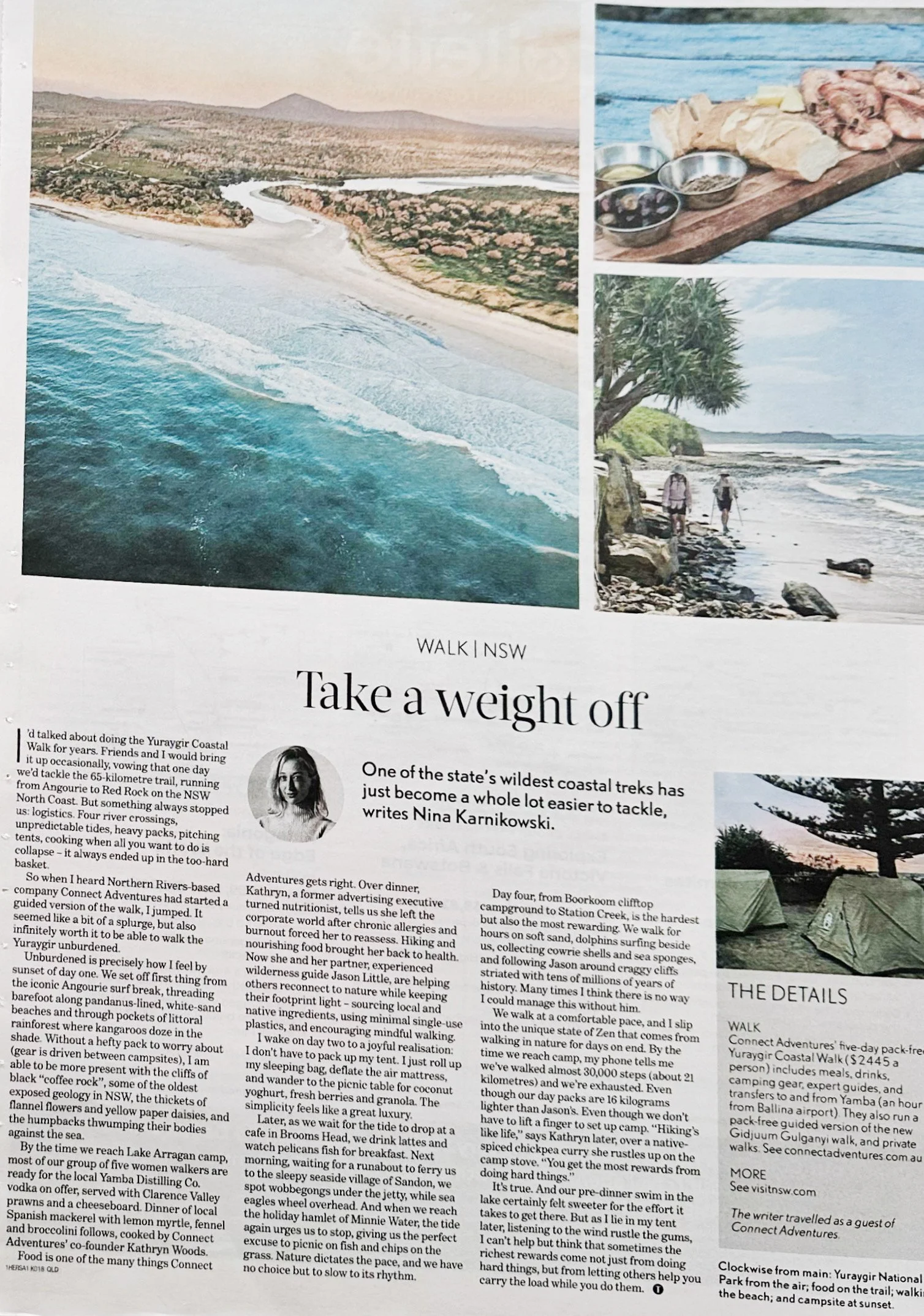
HIKING THE YURAYGIR COASTAL TRACK: SMH TRAVELLER
One of the state's wildest coastal treks has just become a whole lot easier to tackle, writes Nina karnikowski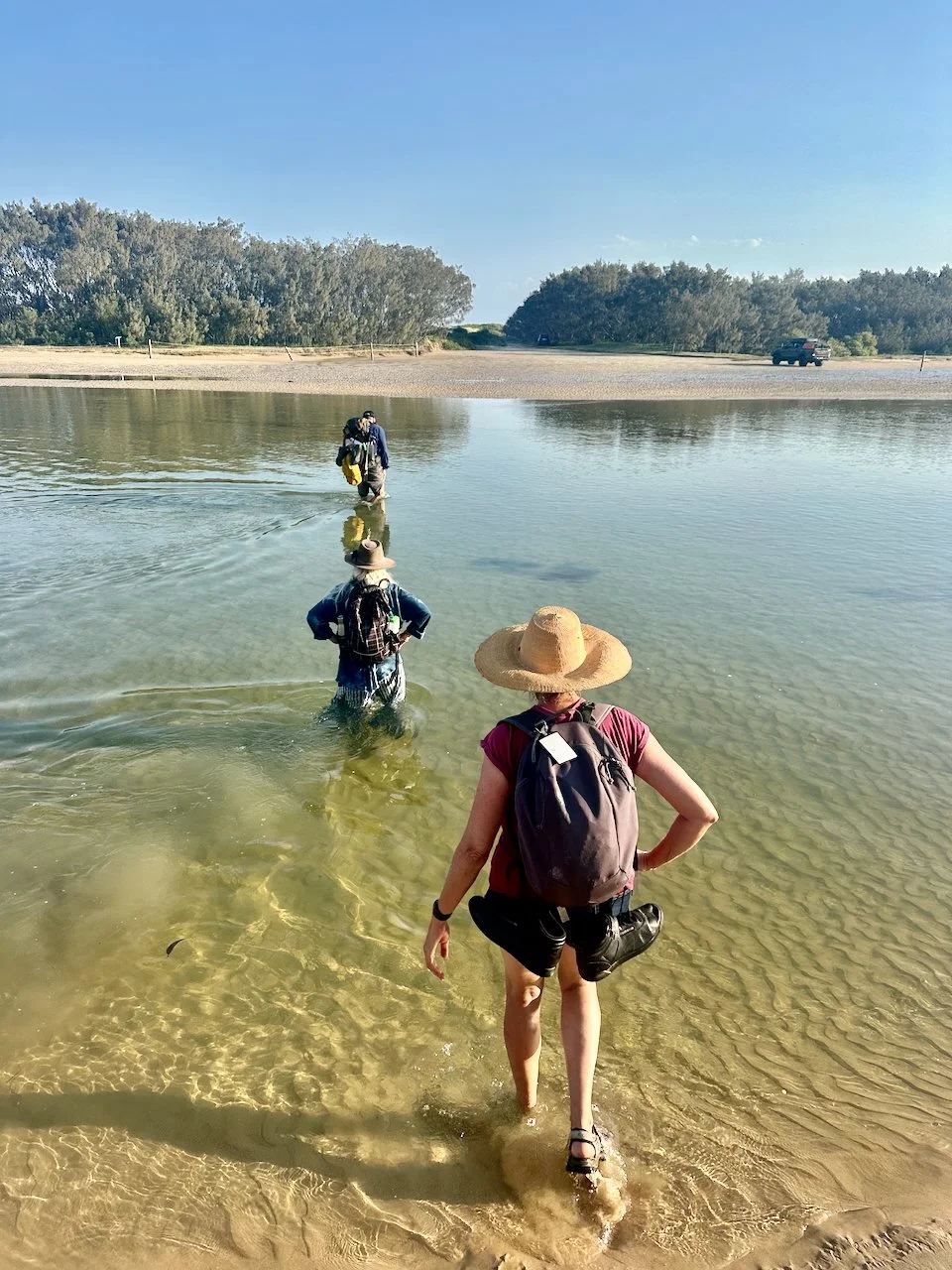
I’d talked about doing the Yuraygir Coastal Walk for years. Friends and I would bring it up occasionally, vowing that one day we’d tackle the 65-kilometre trail, running from Angourie to Red Rock on the NSW North Coast. But something always stopped us: logistics. Four river crossings, unpredictable tides, heavy packs, pitching tents, cooking when all you want to do is collapse – it always ended up in the too-hard basket.
So when I heard Northern Rivers-based company Connect Adventures had started a guided version of the walk, I jumped. It seemed like a bit of a splurge, but also infinitely worth it to be able to walk the Yuraygir unburdened.
Unburdened is precisely how I feel by sunset of day one. We’d set off first thing from the Angourie surf break, threading barefoot along pandanus-lined, white-sand beaches and through pockets of littoral rainforest where kangaroos doze in the shade. Without a hefty pack to worry about (gear is driven between campsites), I am able to be more present with the cliffs of black “coffee rock”, some of the oldest exposed geology in NSW, the thickets of flannel flowers and yellow paper daisies, and the humpbacks thwumping their bodies against the sea.
By the time we reach Lake Arragan camp, most of our group of five women walkers are ready for the Yamba Distilling Co. vodka on offer, served with Clarence Valley prawns and a cheeseboard. Dinner of local Spanish mackerel with lemon myrtle, fennel and broccolini follows, cooked up by Connect Adventures’ co-founder Kathryn Woods.
Local food is one of the many things Connect Adventures gets right. Over dinner, Kathryn, a former advertising executive turned nutritionist, tells us she left the corporate world after chronic allergies and burnout forced her to reassess. Hiking and nourishing food brought her back to health. Now she and her partner, experienced wilderness guide Jason Little, are helping others reconnect to nature while keeping their footprint light - sourcing local and native ingredients, using minimal single-use plastics, and encouraging mindful walking.
I wake on day two after a joyful realisation: I don’t have to pack up my tent. I just roll up my sleeping bag, deflate the air mattress, and wander to the picnic table for coconut yoghurt, fresh berries and granola. The simplicity feels like a great luxury.
Later, as we wait for the tide to drop at a cafe in Brooms Head, we drink lattes and watch pelicans fish for breakfast. Next morning, waiting for a runabout to ferry us to the sleepy seaside village of Sandon, we spot wobbegongs under the jetty, while sea eagles wheel overhead. And when we reach the holiday hamlet of Minnie Water, the tide again urges us to stop, giving us the perfect excuse to picnic on fish and chips on the grass. Nature dictates the pace, and we have no choice but to slow to its rhythm.
Day four, from Boorkoom clifftop campground to Station Creek, is the hardest but also the most rewarding. We walk for hours on soft sand, dolphins surfing beside us, collecting cowrie shells and sea sponges, and following Jason around craggy cliffs striated with tens of millions of years of history. Many times I think there is no way I could manage this without him.
We walk at a comfortable pace, and I slip into the unique state of Zen that comes from walking in nature for days on end. By the time we reach camp, my phone tells me we’ve walked almost 30,000 steps (about 21 kilometres) and we’re exhausted. Even though our day packs were 16 kilos lighter than Jason’s. Even though we didn’t have to lift a finger to set up camp. “Hiking’s like life,” says Kathryn later, over a native-spiced chickpea curry she rustled up on the camp stove. “You get the most rewards from doing hard things.”
It’s true. And our pre-dinner swim in the lake certainly felt sweeter for the effort it took to get there. But as I lie in my tent later, listening to the wind rustle the gums, I can’t help but think that sometimes the richest rewards come not just from doing hard things, but from letting others help you carry the load while you do them.
This story first appeared in print, below, and online here.